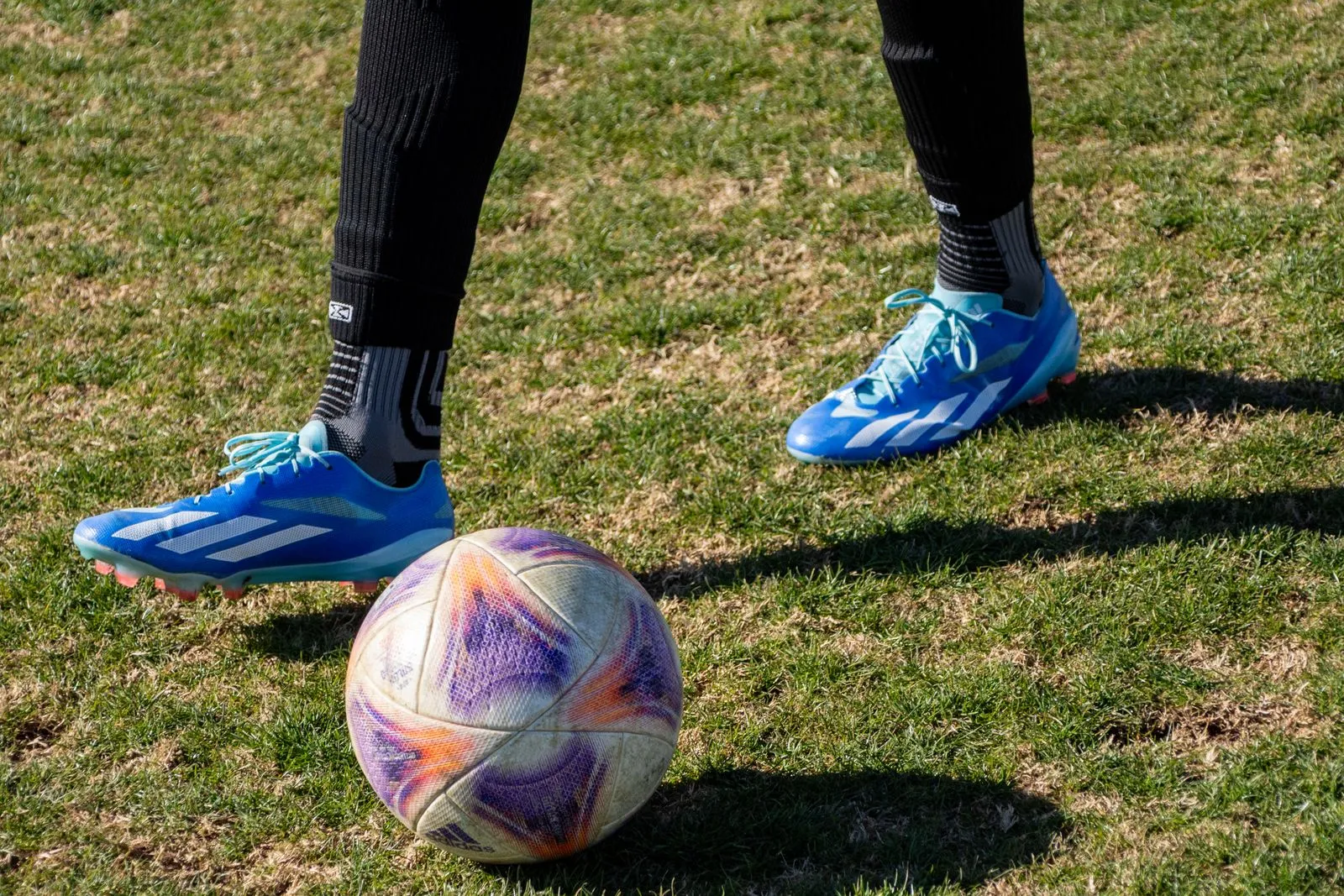
The right soccer cleats help you move confidently and keep your footing suited to the field beneath you. A pair designed for natural grass may feel unstable or wear quickly on artificial turf, while outdoor studs can be unsafe on an indoor court. Start by identifying the surfaces you play on most, then compare the outsole, stud pattern, and fit. These practical checks can help you choose cleats that feel secure from warmups through the final whistle.
Natural Grass Cleats
For natural grass, look for firm-ground cleats, often labeled FG. Their molded studs provide traction on typical, well-maintained fields. Studs are usually longer and more widely spaced than those on turf shoes, helping them grip soil and release as you turn. Avoid wearing these on hard surfaces: the studs can feel uncomfortable, reduce stability, and wear down faster.
Field conditions matter. On soft, wet ground, soft-ground cleats with replaceable or longer studs may offer more bite, but they are not a default choice for every grass field. Check league rules and the field’s condition before using them. If the ground is dry and firm, longer metal studs can create too much pressure underfoot and may be prohibited.
Artificial Turf Options
Artificial turf shoes, commonly labeled TF, have many short rubber nubs spread across the outsole. This pattern distributes contact across the surface and suits many older or shorter-pile turf fields. The low profile can feel more stable than long studs on a hard base. Turf shoes can also work for casual play on firm ground, though they may not provide enough grip on wet or muddy grass.
Some newer artificial fields are designed for cleats labeled AG. These typically use shorter, more numerous studs than firm-ground models, helping spread pressure across the foot. Turf and artificial-grass systems differ, so check the facility’s guidance rather than assuming one outsole suits every field. If you play on several surfaces, choosing the shoe for the surface you use most often is usually more dependable than seeking one pair for all conditions.
Indoor Court Shoes
Indoor soccer shoes have a flat, non-marking rubber outsole rather than studs. The grippy pattern supports quick changes of direction on smooth court floors without digging into the surface. Look for an outsole marked non-marking, and confirm that the venue permits the shoe. Outdoor cleats are not suitable for indoor courts: studs can damage floors, interfere with movement, and increase the risk of slipping.
Indoor shoes often have a close-fitting upper and a low profile for ball control. That does not mean they should feel cramped. Try them with the socks you plan to wear, and check that your heel stays in place during a short walk or gentle side step. If you also play outdoors, keep a separate pair for indoor use to preserve the outsole and avoid bringing dirt onto the court.
Check Fit Before Buying
Try cleats late in the day, when feet may be slightly larger, and wear your usual soccer socks. The shoe should feel snug around the midfoot and heel without pinching. Leave a small amount of space at the toes, but avoid a loose fit that lets your foot slide forward when stopping. Walk, jog in place, and make a few gentle lateral movements to spot pressure or heel lift.
Check both feet, since they may differ slightly in size, and fit the larger foot. Pay attention to the width and shape of the toe box as well as the length. Leather uppers may soften and adapt with wear, while synthetic materials often keep their shape more consistently; neither should require painful break-in. At Casco Soccer Supply in Portland, you can ask for help comparing options for your regular playing surface.
Choose an outsole for the surface you play on most, and check field or venue rules before taking new cleats out. Then prioritize a secure heel, comfortable toe room, and no painful pressure points. A careful try-on can prevent avoidable discomfort and help you play with confidence. Compare surface-specific options before your next match.